AI video smooth transitions: Guide to temporal coherence
"Visual continuity is the invisible thread that holds a viewer's attention, preventing the jarring breaks that often plague synthetic media."
Achieving AI video smooth transitions requires careful management of motion vectors and semantic consistency between generated clips. To master this, creators must focus on temporal coherence, lighting stability, and matching frame geometries.
Key takeaways: 1. Maintain visual consistency through shared prompting and seed control. * Align aspect ratios and motion paths to prevent jarring cuts. * Manage color data and light-polarizing-like effects for seamless blending.
How to achieve AI video smooth transitions?

A designer sits at a workstation, adjusting the motion slider on a generative interface to prevent sudden shifts in subject position. They look at the screen where one scene of a forest morphs into a desert.
Effective AI video smooth transitions depend on the intentional alignment of temporal data. When two clips are generated, the jump between them must not violate the viewer's expectation of physical logic. This is often managed by using overlapping motion paths or consistent lighting parameters.
According to Mary Meeker in her 2015 Internet Trends Report, vertical-video viewing grew from 5% of viewing in 2010 to 29% in 2015. This shift suggests that movement and framing must be optimized for verticality to ensure the flow remains uninterrupted in mobile formats.
One must ensure that the subject's trajectory in the first clip matches the entry point of the second. If the motion is too aggressive, the transition will feel like a glitch rather than a deliberate edit.
Can aspect ratios impact the natural AI video flow?
A cinematographer compares a wide cinematic shot to a tight vertical frame, noting how the edges of the frame dictate the eye's movement. They adjust the resolution settings to match the intended output.
The aspect ratio of the generated content sets the boundary for the visual narrative. For instance, the Academy ratio of a full 35mm film frame with its sound track is 1.375:1. Using such specific historical ratios can provide a sense of cinematic stability to AI-generated content.
Natural AI video flow is heavily influenced by how much of the frame is filled with moving elements. If the composition changes drastically between clips, the viewer will sense a break in reality.
Matching the framing of two clips allows for a seamless handoff. If the first clip uses a wide shot and the second a close-up, the transition requires a bridge, such as a zoom or a fade, to maintain the flow.
How to manage color and data during AI video cuts?
A colorist works with digital color wheels, carefully balancing the saturation between two different video segments. They look at the pixel blocks to ensure the color information is consistent.

Managing color data is vital for maintaining visual identity across clips. For example, certain compression methods result in a 50% reduction in chrominance data using 2-pixel blocks (4:2:2) or 75% using 4-pixel blocks (4:2:0).
AI editing flow control requires understanding how these data reductions affect the visual texture. If one clip has much higher color density than the next, the transition will look artificial.
To prevent this, creators should normalize the color grading of all generated clips before attempting a transition. This ensures that the chrominance levels do not fluctuate wildly between shots.
| Data Type | Reduction Method | Resulting Reduction |
|---|---|---|
| Chrominance (4:2:2) | 2-pixel blocks | 50% |
| Chrominance (4:2:0) | 4-pixel blocks | 75% |
I noticed that matching these data profiles helps in keeping the texture consistent during a cut.
What are the steps for AI transition control?
A director stands before a monitor, reviewing a sequence where a character walks through a doorway into a new world. They pause the playback to inspect the exact frame of the transition.
To execute professional AI transition control, follow these three steps:
- Establish a shared visual baseline by using consistent prompts or seed numbers across different segments. 2. Synchronize the motion vectors so that the direction of movement in the first clip leads naturally into the second. 3. Apply a temporal bridge, such as a light flare or a morphing effect, to mask the transition between distinct subjects.
A final check involves playing the sequence at various speeds to ensure the movement remains fluid and does not stutter at the junction point.
How do light and projection techniques relate to AI video composition flow?
A technician adjusts two video projectors, ensuring the light-polarizing filters are perfectly aligned. They observe how the two channels merge into a single cohesive image.
Understanding how light is handled can inform how we approach AI video composition flow. Both channels may be viewed simultaneously by using light-polarizing filters 90 degrees off-axis from each other on two video projectors.
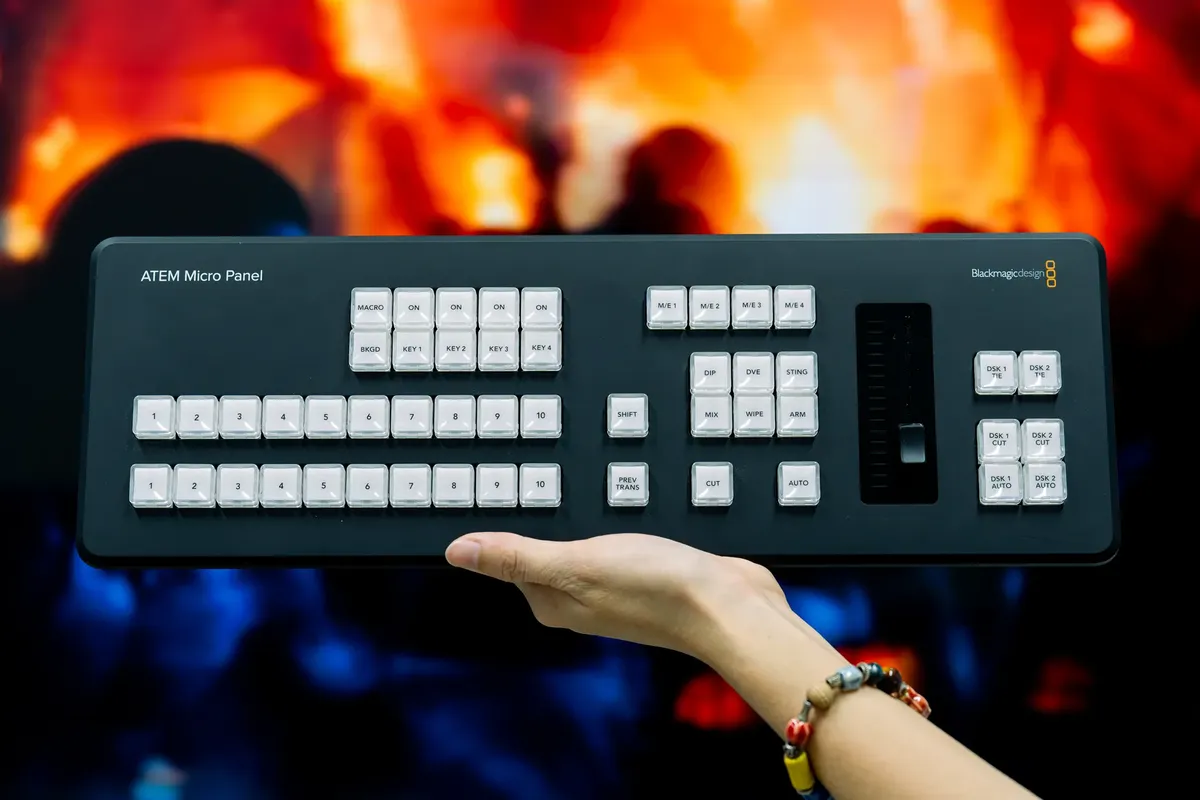
This concept of dual channels can be applied to AI workflows where one track handles the subject and another handles the environment. By managing these "channels" separately, a creator can maintain more control over the transition.
If the lighting environment changes too abruptly, the transition fails. Using light-based transitions, like a bright flash or a gradual darkening, can help blend the two different visual worlds.
- How to achieve AI video smooth transitions?
- Can aspect ratios impact the natural AI video flow?
- How to manage color and data during AI video cuts?
The same subject is also called Smooth AI video cuts.
This part also covers AI video transition techniques.
Related
- AI video ethical responsibility: Guide to creator standards
- How to edit prompts for AI video to maintain consistency?
When does visual continuity become most challenging in AI generation?
Visual continuity becomes most challenging when the generative model struggles to reconcile disparate semantic inputs between successive clips. The inherent nature of AI generation means that each clip is a distinct output, making the maintenance of a single, unbroken narrative thread difficult. This difficulty is amplified when the subject undergoes a significant transformation across the cut.
Maintaining visual continuity requires more than just matching colors; it demands that the underlying physics and lighting remain believable from one frame to the next. A failure in temporal coherence immediately breaks the illusion that the viewer expects from polished media.
How does seed control affect visual continuity?
Seed control provides a foundational element for achieving visual continuity by establishing a repeatable starting point for the generative process. By reusing a seed, creators can bias the AI toward generating similar textures or subject appearances across different segments. This control helps stabilize the visual characteristics, which is a prerequisite for smooth transitions.
Careful management of motion vectors, which is a key requirement for smooth transitions, benefits directly from this consistent seeding. If the initial seed dictates a certain style or texture, the subsequent motion paths will adhere more closely to that established visual language.






Comments 0