50fps rendering effects tips for high-action scenes best
Using 50fps rendering in AI video post production enhances motion fluidity and reduces visual stuttering during high-speed sequences. This technique is ideal for creators looking to smooth out the temporal inconsistencies often found in generative AI outputs.

* Improved Motion Fluidity: Higher frame rates mitigate the jittery appearance of AI-generated motion. * Enhanced Visual Stability: Increasing the frame count helps maintain consistent textures across frames. * Targeted Application: This method is most effective for high-action scenes rather than static portraits.
What are the effects of rendering at 50fps?
I sit before my monitor, watching a sequence of AI-generated water droplets fall in slow motion. The movement feels choppy, jumping from one position to another without the natural progression of physics.
To fix this, I apply a 50fps rendering technique to bridge the gaps between the generated keyframes.
The 50fps rendering effects primarily manifest as a significant reduction in motion blur artifacts and temporal flickering. By increasing the frequency of frames, the transition between generated images becomes much smoother to the human eye.
This process stabilizes the visual flow, making the synthetic movement appear more grounded in reality.
High frame rate rendering serves as a vital tool for professional editors working with generative content. While standard 24fps or 30fps settings are common for cinema, AI outputs often require higher density to hide the mathematical "jumps" between generated steps.
When I adjust my export settings, the visual jitter that once defined the clip begins to dissolve into a cohesive stream of motion.
- Increase the temporal resolution of the video frames.
- Smooth out the motion between keyframes.
- Reduce the perceived stutter in fast-moving objects.
How to use AI video post production for better motion? 50fps rendering effects
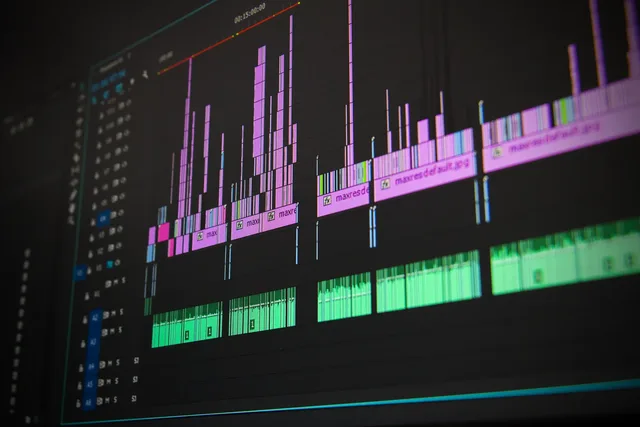
I drag the file across the screen in my quiet office, feeling the smooth glide of the video after initiating the AI rendering.
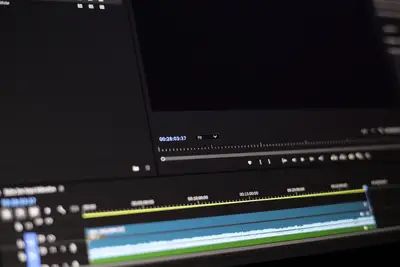
The workstation hums quietly in the dark room as I drag a heavy raw AI file into my editing timeline. I select the clip and prepare to initiate the high frame rate rendering process to ensure the final output meets professional standards.
To implement an effective AI post production workflow, follow these steps:
- Identify segments where motion appears jittery or lacks temporal consistency. 2. Apply an optical flow or frame interpolation tool to generate the intermediary frames. 3. Set the final export resolution and frame rate to 50fps to lock in the smoothness.
After completing these steps, I perform a final check by scrubbing the timeline rapidly to ensure no new artifacts were introduced during the interpolation.
Using a frame rate production guide helps in deciding whether the specific scene benefits from this extra density or if it creates unnecessary file bloat.
In this sequence, the second step is the longest.
Can high frame rate rendering fix AI jitter?
I watch the playback on a large screen, noticing how a character's movement once felt robotic and disconnected. The software processes the request, adding layers of data to fill the empty spaces between the original AI frames.
Applying high frame rate rendering is a common solution for the "strobe effect" seen in many AI videos. Because AI models generate frames based on probability rather than continuous physics, the resulting motion can feel disconnected.
Increasing the frame rate helps mask these logical gaps by providing more visual data points per second.
I find that this approach works best when the original AI generation has a high enough base quality. If the underlying image is heavily distorted, adding more frames might simply replicate the distortion more frequently.
A successful 50fps rendering technique requires a balance between the density of the frames and the structural integrity of the initial generation.
When should you apply 50fps in AI?
A bright light flashes on my desk as the rendering progress bar reaches the halfway mark. I am working on a sequence involving fast-moving clouds and sweeping landscape shots where fluid motion is essential for immersion.
Applying 50fps in AI is most beneficial during high-velocity movements or complex environmental changes. In scenes where objects move quickly across the screen, the extra frames prevent the "teleportation" effect where an object seems to skip parts of its path.
This is particularly useful for cinematic transitions and action-oriented content.
| Feature | Standard Rendering (24-30fps) | 50fps Rendering |
|---|---|---|
| Motion Smoothness | Moderate | High |
| Temporal Jitter | Visible in AI clips | Reduced |
I noticed that for slow, static shots, the extra frames provided little visible benefit. The limitation of this method is that it cannot fix fundamental structural errors in the AI's understanding of object permanence; it only smooths the transition between the errors that already exist.
This part also covers Best rendering practices.
AI post production workflow
Related
- What legal issues are arising from AI content?
- Deepfake ethics management: Why transparency builds trust
Which scenes benefit most from 50fps?
High-action sequences and scenes involving fast-moving clouds or sweeping landscapes benefit most from this technique. These specific conditions allow the increased frame density to mask the mathematical jumps and teleportation effects that occur when objects move quickly across the screen.
Using 50fps is less effective for static portraits or slow, static shots. In these instances, the extra frames provide little visible benefit and may only result in unnecessary file bloat without improving the perceived motion fluidity.
One should exercise caution when the underlying AI generation contains heavy distortions. Because the process replicates existing data, adding more frames to a low-quality source might simply repeat the structural errors more frequently rather than fixing them.






Comments 0