Interview questions: How to avoid ruining conversation flow
"A single question can change the entire tone of a conversation if it is too long to process."
The length of an interview question determines how much mental energy the subject has left to actually answer it. If the inquiry is a sprawling paragraph, the interviewee often loses the core intent, leading to wandering answers that fail to hit the mark.
* Keep questions concise to maintain focus. * Use visual cues to separate questions from answers. * Avoid the "interrogation trap" of overly long inquiries. * Balance brevity with enough context to spark a meaningful response.

Why does a long question ruin the flow?
The studio lights hum in the silence after a guest finishes a sentence, and I find myself staring at a transcript that looks more like a legal deposition than a conversation. When a question spans five sentences, the subject often forgets the first half by the time the moderator reaches the end.
A question that is too long forces the interviewee to perform a mental summary before they can even begin to answer. This cognitive load shifts the focus from the subject's expertise to their ability to track the interviewer's logic.
When the inquiry is bloated, the response usually becomes defensive or brief as the subject tries to get back to the point.
In professional settings, a question should ideally be a single, focused thought. If you have three points to make, they should be three separate questions. This allows the subject to address one idea at a time, ensuring the depth of the response matches the importance of the topic.

conversation — The visual impact of interview subtitles
At midnight, the editor winces at the bright monitor when a massive wall of text obscures the guest's face.
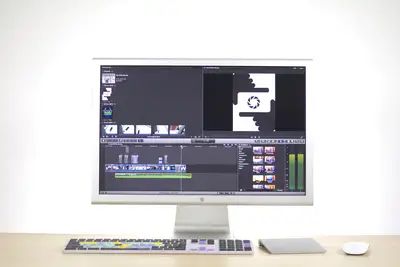
The editor sits at a dual-monitor setup, dragging text boxes across a timeline to ensure the dialogue looks clean. On one screen, the raw footage shows a guest speaking; on the other, the subtitles must be perfectly timed to match the rhythm of the speech.
In video production, the length of the question affects how the subtitles are managed on screen. If a question is too long, the text becomes a wall of words that obscures the subject's face and distracts the viewer.
Proper subtitle management requires breaking long inquiries into digestible chunks that reflect natural breathing patterns.
| Element | Long Question Impact | Short Question Impact |
|---|---|---|
| Readability | High cognitive load; hard to follow. | Instant comprehension; easy flow. |
| Visuals | Large text blocks cover the screen. | Clean, minimal, and non-intrusive. |
| Subject Response | Often vague or defensive. | Targeted and insightful. |
| Editing Time | Difficult to sync and pace. | Streamlined and rhythmic. |
When designing subtitles, the goal is to provide enough context without overwhelming the visual field. If the question is a single sentence, it can often sit on one line. If it is a multi-part inquiry, it needs to be broken down to prevent the viewer from reading a "wall of text."
Deconstructing the perfect question structure
I remember sitting in a quiet room in Manhattan, watching an interviewer ask a guest a question that lasted nearly two minutes. By the time the guest started talking, the audience had already lost interest in the original topic.
A great interview question follows a funnel-like structure: start with a brief context, provide the specific inquiry, and then stop. The context should never be longer than the question itself.
If the setup requires a lecture, the interviewer should have done their homework before the cameras started rolling.
- Establish the Context: Provide only the necessary background to ground the question. 2. Deliver the Pivot: Transition from the background to the specific inquiry using a clear bridge. 3. The Hard Stop: End the question clearly to allow the subject space to breathe and respond.
The "Hard Stop" is the most important part. Once the question is asked, the interviewer must remain silent. This silence is not just a pause; it is an invitation for the interviewee to own the space.

How to balance length with necessary context
The guest looks confused, glancing at the interviewer as if waiting for the "real" question to finally arrive. This awkwardness happens when the interviewer provides too much "fluff" or unnecessary data before getting to the heart of the matter.
While brevity is key, a question that is too short can feel abrupt or lack the necessary nuance to elicit a deep response. The balance is found by ensuring the question is long enough to be specific but short enough to be processed instantly.
A well-constructed question provides just enough "why" to make the "what" meaningful.
If you find yourself needing to include a lot of data in a question, consider if that data should actually be part of the interview's introductory segment. If the information is vital to the question's logic, keep it to a single, punchy sentence.
If it is just "extra" information, move it to the background or remove it entirely.
When should you avoid long questions?
A tense atmosphere fills the room when a moderator asks a question that feels like a trap, loaded with assumptions and lengthy justifications. This is the moment where the interview shifts from a conversation to an interrogation.
Long questions should be avoided in high-stakes environments where the subject's emotional state or time is limited. In these scenarios, the goal is clarity and truth, not a debate.
If you are conducting a rapid-fire interview or a sensitive emotional interview, brevity is your best tool for maintaining rapport.
It is important to note that these rules do not apply to academic or investigative journalism where a lengthy, evidence-based premise might be required to challenge a subject. In those specific professional contexts, the length is justified by the need for precision.
When I tried the steps in order, the second one is where I paused longest.
However, this does not apply in every situation.





Comments 0