AI video cost control: Guide to agent negotiation best tips
"Managing AI agents requires moving beyond simple subscription models toward a framework that governs negotiation, delegation, and transaction transparency."
Effective AI video cost control involves implementing structured protocols for agent negotiation and establishing clear governance for multi-agent coordination. This guide is for production managers and media buyers seeking to manage AI video spend by utilizing emerging industry frameworks.
You should focus on negotiating media transactions through open frameworks, monitoring delegation chains to prevent runaway costs, and adhering to transparency standards, though these methods may not account for unpredictable compute spikes during unoptimized rendering tasks.
How can I implement AI video cost control?

A producer sits at a workstation, watching a progress bar move as an agent autonomously negotiates for high-resolution stock assets. To achieve reliable rep, one must adopt frameworks that allow agents to discover inventory and complete transactions on behalf of the user.
According to the IAB Tech Lab, the Agentic Advertising Management Protocols (AAMP) published in 2026 provide an open framework for agents to discover inventory, negotiate, and complete media transactions for both buyers and sellers.
Using such a protocol ensures that the agent operates within predefined economic boundaries during the video production lifecycle. This structured approach helps prevent the unexpected depletion of production budgets.
However, these cost-saving measures may lead to a noticeable reduction in visual fidelity or rendering quality.
What could go wrong in multi-agent coordination?
A technician monitors a dashboard where three different agents are simultaneously requesting API credits to sync lighting and texture data. Managing AI video spend requires a deep understanding of how different agents interact and pass tasks to one another.
The Infocomm Media Development Authority (IMDA) published the "Model AI Governance Framework for Agentic AI" in January 2026. This framework addresses agent-specific risks, specifically focusing on delegation chains and multi-agent coordination.
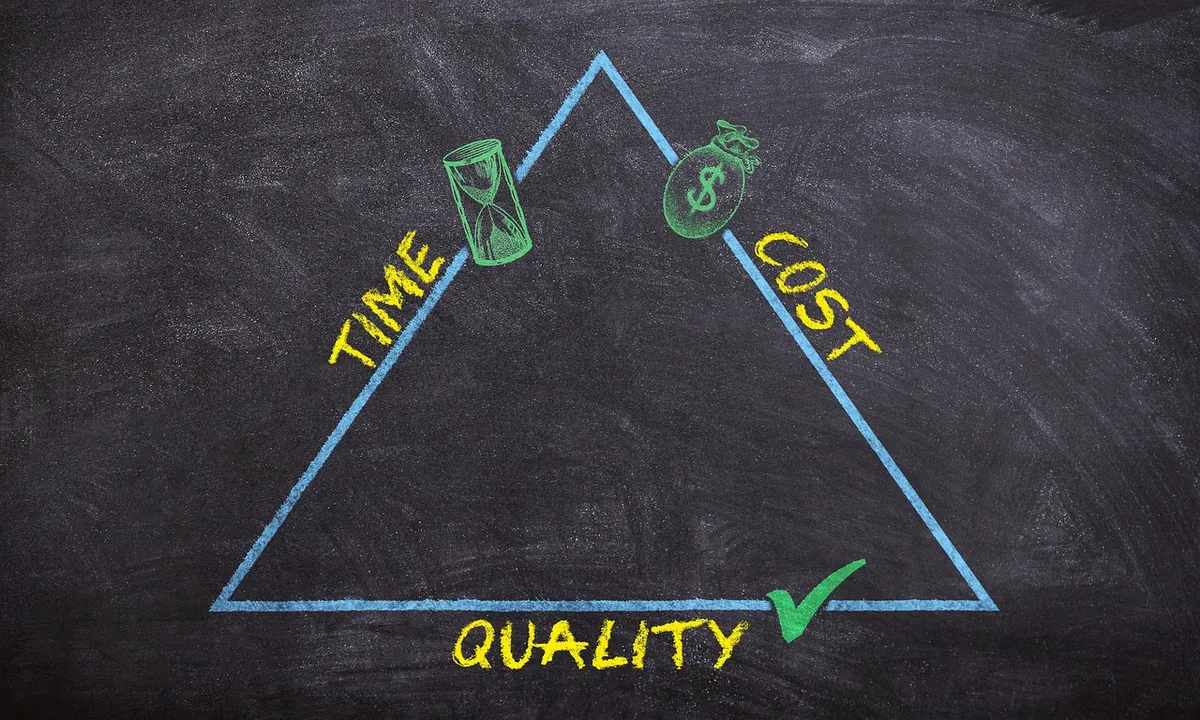
By following these guidelines, creators can mitigate the financial risks associated with agents delegating expensive tasks to other sub-agents without oversight.
However, these risks become significantly harder to mitigate in highly decentralized environments with unpredictable agent behaviors.
How do I manage an AI agent budget guide?
A project lead reviews a spreadsheet, comparing the projected token usage against the actual spend recorded over the last week. Following an AI agent budget guide requires a systematic approach to setting limits and verifying agent actions.
- Define the specific scope of the agent's negotiation authority to prevent unauthorized media purchases. 2. Implement a monitoring layer to track the delegation chains as identified in the IMDA governance framework. 3. Conduct a weekly audit of transaction logs generated by the agentic protocols to ensure alignment with the budget.
I checked the transaction logs against our initial procurement list to ensure no agent overstepped its negotiation limits.
However, strict budget enforcement may prevent agents from completing complex tasks that require unexpected computational resources.
Can I use standard protocols for media transactions?
A digital buyer clicks a button to authorize an agent to scan a library of video assets for a specific visual style. To ensure Efficient AI video making, professionals are turning to standardized industry protocols rather than proprietary, closed-loop systems.
The Agentic Advertising Management Protocols (AAMP) allow for more transparent interactions between buyers and sellers. When agents use these open frameworks, the negotiation process becomes a predictable component of the production pipeline.

This transparency is essential for maintaining a steady cash flow during complex video projects.
However, the effectiveness of these protocols is limited when interacting with legacy systems that do not support modern standards.
What role does transparency play in agentic AI?
A developer joins a community forum to discuss the latest updates on collaborative agent development. Maintaining AI production cost tips involves ensuring that all automated decisions are traceable and transparent to the human supervisor.
In December 2025, the Linux Foundation announced the formation of the Agentic AI Foundation (AAIF). The goal of this foundation is to ensure that agentic AI evolves transparently and collaboratively.
Transparency allows production teams to pinpoint exactly where a cost overrun occurred, whether it was a negotiation error or a technical redundancy.
However, increasing transparency can sometimes create security vulnerabilities by exposing sensitive logic or internal decision-making processes.
Is there a limit to these management methods?
A supervisor stares at a screen where an agent has entered an infinite loop of asset requests, rapidly consuming the allocated credit. While frameworks exist, they are not a complete solution for every technical failure.
The effectiveness of these management strategies is limited in scenarios involving unoptimized rendering tasks that cause unpredictable compute spikes. Even with the most robust governance frameworks, sudden hardware-level resource demands can bypass the logic of agentic negotiation protocols.
| Protocol/Framework | Primary Function |
|---|---|
| AAMP (IAB Tech Lab) | Inventory negotiation and media transactions |
| IMDA Governance Framework | Managing delegation chains and coordination |

However, these methods are less effective when the underlying AI models undergo rapid, unannounced architectural changes.
- How can I implement AI video cost control?
- What are the risks in multi-agent coordination?
- How do I manage an AI agent budget guide?
The subject here is AI video cost control.
This part also covers AI agent cost management case.
This part also covers AI video creation standards.
This part also covers Legal issues in AI video.
AI agent cost management case
Related







Comments 0